
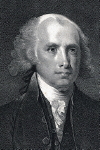
 When the James Madison Memorial Building finally opened on May 28, 1980, it filled a block that had been empty for almost 20 years. This was a block that had housed a great variety of buildings whose businesses had catered to the workers who crowded the Congressional buildings that abutted it to the north and west.
Though these buildings are remembered with some fondness, it can probably safely be said that while the pocketbooks of those who did business there were worse off due to their destruction, their stomachs were kept from some damage. It is the 100 block of what is today Independence Avenue of which I will write today.
When overcrowding caused the House of Representatives to spill out of its space in the Capitol Building, plans were drawn up to build a new office building across the street. In 1908, the Representatives were able to take up their new space in what is now the Cannon House Office Building. Unfortunately, plans had not been made for a cafeteria, so Members and staff had to seek their lunches elsewhere.
Restaurants had always been in this area, including the Caspari’s Congress House restaurant in which Lincoln bowled while a Congressman in the late 1840’s, and so unsurprisingly, a whole raft of restaurants grew up in the next couple of blocks: the 100 block of B Street and the 200 and 300 blocks of Pennsylvania Avenue.
 The restaurants tended to be simple, boasting Greek, American, and Chinese fare, and were held in high esteem by those on tight budgets, including students. Leonard Kirsten, who was interviewed by the Overbeck History Project, remembers that as a student at George Washington University in the 1940s, he would take the bus to the Library of Congress to study, as it was quiet, and then have lunch across the street because it was cheap.
The only people displeased with this state of affairs were those who were responsible for the Capitol and its surroundings, believing (probably correctly) that a row of cheap restaurants was not exactly the kind of thing people would want to see as they approached the seat of power of the country. Looking at pictures taken at the time, which show a series of mismatched 1-3 story buildings, it is not hard to see their point.
In the early 1960’s, therefore, plans were drawn up to fix up the area, and – eventually – expand the Library of Congress. The 100 block of Independence was therefore condemned, and soon thereafter torn down.
It took another 10 years, however, before construction on the library was begun, and the building did not open until 1980.
These three blocks, and particularly the block on which the Madison building now stands, are known affectionately as “Ptomaine Row.” When, exactly, these blocks were given the name is unclear. The Washington Post does not use the name until 1960, and in the early 1960’s, there are numerous mentions during various hearings held in Congress – but nothing from the time when the row was actually in use.
It is, of course, quite possible that the customers had long used this name before a newspaper actually used it, and only when the buildings were in peril was there a need to refer to them as a single entity.
If you want to get a sense of the history, though without the ptomaine poisoning, the only survivors from this era are the Tune Inn at 331 Pennsylvania Ave SE (which opened in 1955) and Pete’s Diner at 212 2nd Street SE.
Remember playing touch football, with Ted Gay and others, on then open field now occupied by the Madison Building. Also, “dining” in the late ’60s at the Neptune Inn, on the 200 block. It was cheap, edible, and filling.
Corrected website. Sorry.
I was wondering what had happened to the field in the meantime – the only picture I found showed it full of rubble, but that was probably taken during the demolition.
Today it would presumably be turned into a parking lot.
Before ground was broken, it was a parking lot. My office used to be in the Jefferson Bldg where we could look across Independence Avenue. First in late 69 it was parking. I remember Jimmies in the 200 block which was the home of the Orlando sandwich.
I lived in a second floor apartment at 115 C Street SE from Sept. 1966 until Jan. 1971. All that time, I had a view of the Jefferson Bldg. beyond the two blocks of grass (there was still some remnant of the former Carroll Street running East-West through the site). I never saw the houses that were torn down in the early 60s, but for a first hand story, see the Overbeck Project interview with Marie Hertzberg.
I know 115 C Street very well, as stayed there for awhile. My husband lived there, on the second floor, where he and his roommate joked about a ghost, and I would always been the lookout from the second floor window. Maybe you can put 115 C on the tour next year, Robert. I also know Marie Hertzberg (through a friend), so will look it up, as Ruth Overbeck was known to say. And Norm, who is a connoisseur of gourmet and gourmand diners and delis, and first told me of the G Man at Mangiolardo’s, makes me want to go back in time to these old haunts.
Liz, if you know of a ghost and you’re holding out, I will haunt you.
I had forgotten. Maybe John was trying to break up with me and making it up.. The ghost looked a bit like Lincoln.. He sat by the window on the second story of 115 C Street looking at the James madison bldg.